

Resignation letter: how to write it seafely for a constructive dismissal case
Resignation letter templates for (1) an amicable resignation and (2) a constructive dismissal resignation. If you might later raise a Personal Grievance, the wording and timing matters.
Resignation letter templates and when to use them
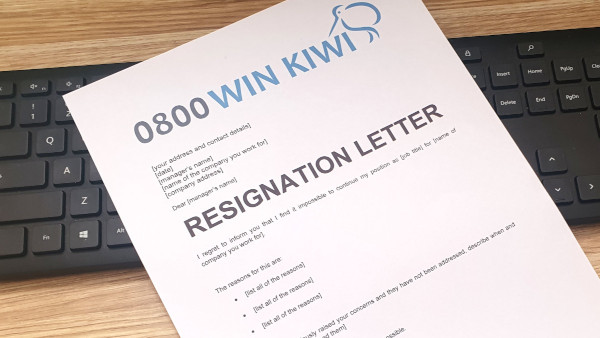
A resignation letter is not just paperwork. In a constructive dismissal situation, it can become key evidence. If an employee resigns because the employer breached duties or treated the employee unfairly, the reasons for resignation should be recorded in writing.
This page includes two templates: (1) a constructive dismissal resignation letter example and (2) an amicable resignation letter template. These templates are starting points. Keep your wording factual and do not include personal attacks.
Constructive dismissal resignation
If you intend to raise a Personal Grievance (PG) for constructive dismissal, your resignation letter should set out a clear complaint and the reasons you say you had no real choice but to resign. The letter should also record any earlier attempts you made to raise concerns.
- Keep it factual: describe the events and what was said or done.
- State the reasons: list the complaints and why you are resigning.
- Record prior concerns: describe when and how you raised issues, and what response you got.
- Final pay: request final pay and any outstanding entitlements be processed.
- Do not over-explain: short, clear, and evidence-based is best.
[your address and contact details]
[date]
[manager's name]
[name of the company you work for]
[company address]
Dear [manager's name]
I regret to inform you that I find it impossible to continue my position as [job title] for [name of company you work for].
The reasons for this are:
[list all of the reasons]
[if you have previously raised your concerns and they have not been addressed, describe when and how you previously raised them]
Please make up my final pay as soon as possible.
Yours sincerely
[your name]
An amicable resignation
If you are resigning on good terms, the goal is usually to keep it simple, professional, and positive.
- Check your notice period in your employment agreement.
- Notify your manager out of courtesy you intend to resign.
- Write your letter of resignation in a concise manner.
- Do not write a lengthy explanation of why you are resigning.
- Avoid being negative.
- Comment on how your employer has benefitted you.
[your address and contact details]
[date]
[manager's name]
[name of the company you work for]
[company address]
Dear [manager's name]
I wish to inform you that I am resigning from my position as [job title] for [name of company you work for]. My last day of employment will be [date] in accordance with clause [clause number] of my employment agreement.
I have accepted an offer of employment at [new place of employment] as a [new job title].
Thank you for the many opportunities I have had with [name of company]. [thank your employer for their support, and mention any positive memories of your workplace.]
I wish you the best to you and the company for the future. Please let me know if I can be of assistance during the transition of the new person into their role.
Yours sincerely
[your name]
If you have a genuine case for constructive dismissal, it is highly unlikely that your employer will respond to the concerns in your resignation letter and will instead move to end the employment relationship. If your employer fails to address the concerns you raised, that can strengthen your constructive dismissal argument.
The fastest way is to submit the case form with a short timeline and key documents.
Employee Unfair Dismissal Case Form
Related articles
Browse all articles
Constructive dismissal: when resignation becomes an unfair dismissal personal grievance
Constructive dismissal (resignation) personal grievance law. If your employer is pushing you to resign, get advice first. In many cases, do not resign.